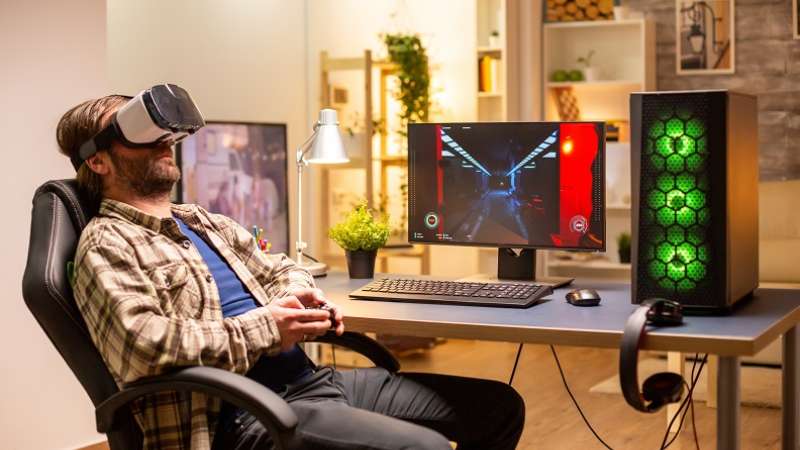
In recent years, the gaming industry has changed at a rapid pace, driven by new technologies and the growing demands of competitive players. One of the most noticeable improvements has been in gaming peripherals, especially the wireless gaming mouse. Devices such as the viper wireless mouse have helped redefine what players expect in terms of speed, accuracy, and comfort. What was once seen as a risky alternative to wired devices is now considered a standard choice for both casual and professional gamers.
The Rise of Wireless Precision in Gaming
For a long time, wired gaming mice were believed to be the only reliable option for serious gaming. The concern was simple: wireless devices were thought to suffer from lag, interference, and inconsistent performance. However, this perception has changed dramatically.
Modern wireless gaming mice now deliver performance that matches, and in many cases exceeds, wired models. Improvements in wireless signal stability and sensor accuracy have removed most of the issues that once held them back. The Viper Wireless Mouse represents this shift clearly, offering smooth responsiveness that supports fast-paced gameplay without noticeable delay.
Another major benefit of wireless technology is freedom of movement. Without a cable dragging across the desk, players can move their mouse more naturally. This is especially important in competitive gaming, where quick reactions and fluid motion can make a significant difference. The removal of cable resistance also improves consistency, allowing for more precise aiming and smoother tracking.
Technological Innovations Driving the Change
The progress of wireless gaming mice has been made possible through continuous technological development. One of the most important improvements is in wireless transmission technology. Modern systems are designed to reduce latency to extremely low levels, making input feel instant and reliable.
High-performance sensors have also played a key role. These sensors can track even the smallest hand movements with high accuracy, ensuring that every motion is reflected correctly on screen. This level of precision is essential for competitive gamers who rely on exact control.
Battery technology has also improved significantly. Early wireless mice often suffered from short battery life, which made them inconvenient for long sessions. Today, many models offer extended battery performance that can last for days or even weeks on a single charge. Fast-charging features have also become common, allowing users to quickly recharge and return to gaming with minimal interruption.
Together, these innovations have helped wireless mice become a dependable choice rather than a compromise.
Design and Ergonomics: A Harmonious Balance
Beyond performance, design and comfort play an important role in the success of gaming mice. The Viper Wireless Mouse, for example, is designed with ergonomics in mind, ensuring that it remains comfortable even during long gaming sessions.
Many modern gaming mice feature lightweight structures that reduce hand fatigue. This is particularly useful for players who spend several hours gaming at a time. The shape of the mouse is also carefully designed to support different grip styles, whether palm, claw, or fingertip grip.
Texture and material choices are equally important. Manufacturers often use matte finishes or rubberised coatings to improve grip and prevent slipping during intense moments. Button placement is also carefully considered, allowing players to reach controls easily without disrupting their hand position.
Customisable buttons have become a standard feature, giving users the ability to assign specific commands or macros. This flexibility allows players to tailor their setup according to the games they play, improving both speed and efficiency.
The Competitive Edge in Modern Gaming
In competitive gaming, every millisecond matters. A slight delay or inaccurate movement can determine the outcome of a match. This is why high-performance wireless mice have become essential tools for serious players.
Features such as adjustable sensitivity settings, commonly known as DPI (dots per inch), allow users to control how fast the cursor moves in relation to physical movement. This means players can switch between fast sweeping motions and precise targeting depending on the situation.
Programmable macros are another important feature. These allow players to assign complex actions to a single button press, improving reaction time and reducing manual effort. Combined with balanced weight distribution and advanced sensors, these features give players a noticeable advantage in fast-paced environments.
Software support has also improved significantly. Many gaming mice now come with dedicated applications that allow users to fine-tune settings such as sensitivity, lighting effects, and button configurations. This level of customisation ensures that each device can be adapted to suit individual preferences and playing styles.
Impact on the Gaming Industry
The rise of advanced wireless gaming peripherals has had a broader impact on the gaming industry as a whole. Game developers are now designing titles that assume players have access to highly responsive equipment. This has led to more complex gameplay mechanics that require precise timing and accurate input.
As a result, modern games often demand higher skill levels, especially in competitive genres such as first-person shooters and real-time strategy games. Players are now able to perform actions that were previously difficult or impossible with older hardware.
The growth of esports has also been influenced by these advancements. Competitive gaming tournaments now feature players using high-performance wireless devices, demonstrating that they are reliable even under the pressure of professional play. This has helped increase audience engagement, as matches become faster, more dynamic, and more skill-driven.
Future Prospects in Wireless Gaming Technology
Looking ahead, wireless gaming technology is expected to continue evolving. One major focus is further reducing latency, even though current levels are already extremely low. Developers aim to make wireless input feel completely indistinguishable from wired connections.
Battery efficiency will also continue to improve. Future devices may feature even longer battery life or more efficient charging systems, reducing downtime further. Some innovations may even explore alternative power solutions to eliminate charging interruptions entirely.
Ergonomic design is another area of ongoing development. Manufacturers are increasingly focused on creating shapes and materials that reduce strain and improve long-term comfort. This is especially important as gaming sessions become longer and more frequent for many users.
Artificial intelligence may also play a role in future peripherals. AI-driven systems could potentially learn a player’s habits and automatically adjust settings for optimal performance. This could include adapting sensitivity based on gameplay style or predicting preferred configurations for different games.
Conclusion
The evolution of wireless gaming mice has transformed the way players interact with digital environments. Devices such as the Viper Wireless Mouse demonstrate how far technology has come, offering a combination of speed, precision, and comfort that was once difficult to achieve without a cable.
As technology continues to improve, wireless gaming peripherals are likely to become even more advanced and personalised. The line between hardware and user will continue to blur, creating more immersive and responsive gaming experiences. This ongoing development signals a future where gaming is not only more competitive but also more intuitive and enjoyable for players at all levels.