Homeowners are becoming more conscious of the need to blend energy efficiency with both safety and environmental responsibility. As housing demands grow, selecting the right type of insulation can greatly impact comfort, monthly energy bills, and the health of those living inside. While traditional materials may offer some degree of efficiency, they often come with concerns about toxicity, flammability, and ecological harm. This is leading more people to seek out modern, innovative attic insulation and whole-home solutions that fulfill contemporary standards for safety and sustainability.
Proper insulation acts as a barrier to unwanted heat loss or gain, making it essential not just for thermal comfort but for responsible energy use. Sustainable insulation provides these benefits while also supporting healthier indoor air quality and delivering longer-term cost savings. Understanding the available options helps homeowners make enlightened choices for their families and the environment.
Understanding the Need for Sustainable Insulation
Residential buildings contribute substantially to overall energy consumption worldwide. To address this, sustainable insulation offers homes a way to maintain stable indoor temperatures with less reliance on heating and cooling systems. This reduces greenhouse gas emissions and cuts utility bills, benefiting individual households and the global community alike. In addition, many sustainable products are designed to have low VOC emissions, lessening the risk of respiratory issues and allergy triggers commonly associated with older insulation types.
By minimizing heat transfer, these materials do more than conserve energy. They contribute to quieter, more comfortable living spaces free from drafts and hot or cold spots. As environmental regulations grow stricter and homeowners demand greener choices, manufacturers are responding with an evolving variety of safe and environmentally conscious products.
Top Eco-Friendly Insulation Materials
Several innovative and renewable insulation options stand out for their safety profiles and environmental strengths:
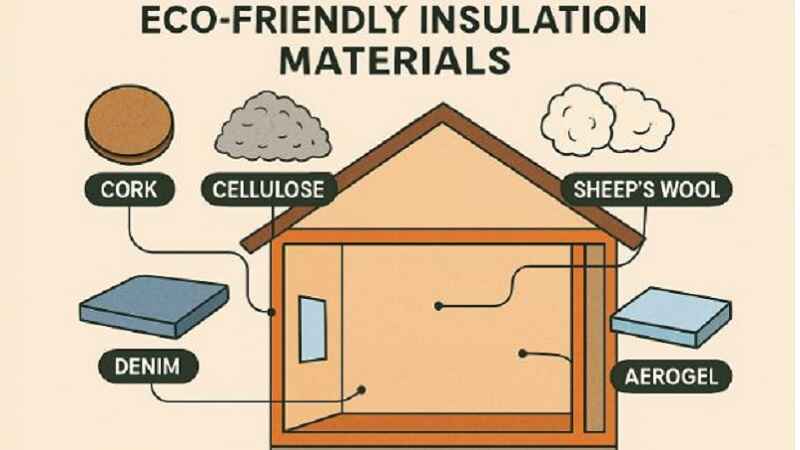
- Cork Insulation: Harvested from cork oak trees using a process that allows the bark to regrow, cork is a renewable, biodegradable, and naturally fire-resistant material. With sound absorption and resistance to mold and pests, cork insulation is both durable and low on chemical additives. More details about cork’s benefits can be found on Treehugger.
- Cellulose Insulation: Primarily made from recycled newspaper or paperboard, cellulose insulation is treated with non-toxic fire-retardant chemicals and provides excellent thermal and acoustic properties. Because it reuses paper waste, it directly reduces landfill accumulation.
- Sheep’s Wool Insulation: This material is wholly natural, renewable, and biodegradable. Sheep’s wool not only insulates well but also helps regulate humidity by absorbing and releasing moisture without compromising its properties.
- Denim Insulation: Made from recycled cotton fibers and old jeans, denim insulation does not irritate the skin or respiratory system and helps decrease the textile waste stream.
- Aerogel: Exceptionally lightweight and possessing a very high R-value, aerogel uses a fraction of the material required for conventional insulation yet provides superior thermal barriers. Though more costly, it can yield significant long-term energy savings.
Innovative Insulation Techniques
Technological progress is also transforming how homeowners approach insulation. Two particularly promising advancements include:
- IoT-Integrated Insulation: By embedding IoT-enabled sensors within insulation layers, homeowners can gather real-time data about temperature gradients, humidity, or air movement inside their walls and attics. This allows for immediate adjustments and smarter control of HVAC systems, maximizing efficiency and reducing repair costs over time.
- Adaptive Insulation Materials: Some newer materials can expand, contract, or otherwise alter their thermal resistance based on environmental conditions. This adaptability leads to consistent comfort, regardless of outside temperature swings, and is particularly beneficial for homes in regions with variable climates.
Case Study: Eco-Friendly Insulation in 3D Printed Homes
The construction industry is embracing efficient and sustainable building methods, with 3D printed homes at the forefront. Companies like Mighty Buildings have collaborated with Honeywell to integrate green insulation directly into 3D printed building panels. By using Honeywell’s Solstice Liquid Blowing Agent, which boasts a global warming potential 99.9% lower than conventional agents, they ensure significant energy savings and reduced carbon emissions per home. This approach also streamlines construction, reduces job site waste, and expedites project timelines. Such partnerships are setting new standards for both energy efficiency and sustainability in residential construction, demonstrating what is possible when technology and environmental stewardship intersect.
Benefits of Sustainable Insulation
- Energy Efficiency: High-quality insulation lowers the energy needed to heat or cool a home, which translates to less strain on utility resources and financial savings over time.
- Reduced Environmental Impact: Use of recycled, renewable, or less chemically intensive materials cuts the environmental costs of both manufacturing and demolition, helping to shrink each home’s carbon footprint.
- Improved Health and Safety: Many sustainable products contain fewer or zero volatile organic compounds (VOCs), thus improving indoor air quality and reducing exposure to allergens or toxic substances.
- Long-Term Durability: Many eco-friendly insulation solutions are engineered for longevity, offering resistance to moisture, pests, molds, and fire, which reduces the need for frequent replacements.
Considerations for Homeowners
When investing in sustainable insulation, homeowners should start with an assessment of the building’s existing structure and climate zone. Factors like R-value, upfront cost, lifespan, and safety certification are essential. Consultation with professionals will ensure the chosen material integrates smoothly with existing walls or attics and meets local building codes. Furthermore, research using reliable sources, such as Energy.gov, can provide invaluable guidance when comparing materials and performance expectations.
Conclusion
Choosing safe and sustainable insulation is a wise step towards reducing energy bills, protecting indoor health, and supporting a greener planet. With innovative materials and techniques such as IoT monitoring and adaptive barriers now available, there are more opportunities than ever for modern homeowners to create efficient, eco-friendly living spaces for themselves and future generations.