The Role of Demolition in Port Modernization
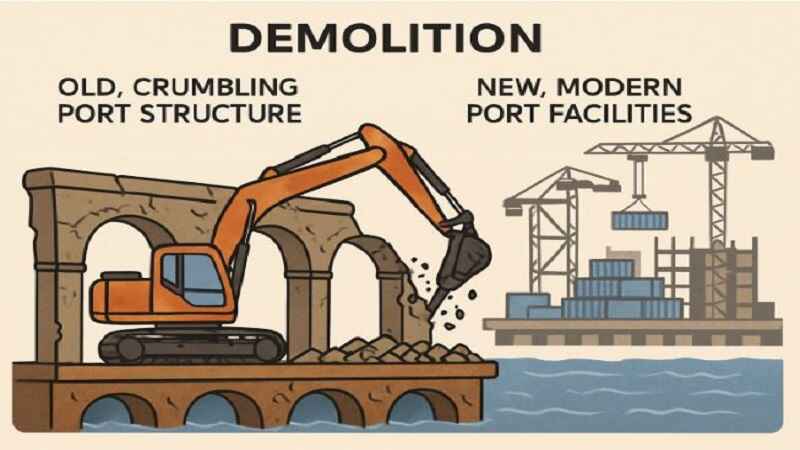
Ports stand as essential nodes in global logistics, driving intercontinental trade and commerce. To keep pace with the steady flow of goods and ever-changing shipping standards, ports must regularly upgrade and renovate their facilities. A crucial first step in port revitalization is the efficient demolition of outdated or underutilized assets. This planned removal process creates the necessary space for modern technology, updated storage facilities, and enhanced logistics systems, ensuring that ports can meet global demands. To understand why professional services are crucial, consider the role of port demolition in enhancing maritime facilities.
Demolition is more than just clearing land. It is a calculated phase where engineers and port authorities remove physical barriers to progress, including aging warehouses, outdated cranes, and derelict piers. For example, the Brooklyn Marine Terminal in New York launched a demolition initiative to replace obsolete cranes with modern, electric-powered alternatives, radically transforming pier operations. The updated layout now supports larger vessels and more efficient cargo flow, directly benefiting both shipping companies and end consumers.
Enhancing Resilience Through Infrastructure Renewal
Old port facilities are often unprepared for current environmental and safety threats. Demolition enables the construction of new infrastructure with seismic reinforcements, storm surge protection, and climate-resistant materials. The Port of San Francisco demonstrates that resilient redevelopment protections make waterfront assets safer from earthquakes and sea-level rise. By focusing on resilience, ports can reduce disaster vulnerability, stay operational during crises, and protect personnel and cargo. This boosts public confidence and supports economic stability by minimizing supply chain disruptions.
Moreover, modern port designs can integrate green infrastructure, such as permeable surfaces and coastal wetlands, to manage flooding naturally. Advanced monitoring systems and smart sensors provide real-time data on structural integrity and environmental conditions, allowing for proactive maintenance. Retrofitting old facilities is often more costly and less effective than starting anew with resilient designs. Collaboration with urban planners, engineers, and environmental experts ensures that ports meet both operational and sustainability goals. Ultimately, investing in resilient port redevelopment safeguards communities while promoting long-term economic growth.
Economic and Environmental Benefits
Investments in demolition and renewal deliver measurable economic returns. Modernized ports attract carriers, streamline operations, and cut costs through automation and energy efficiencies. Upgraded ports often utilize eco-friendly technologies, such as electric cargo handlers and low-emission vehicles, which support sustainability goals. The U.S. Maritime Administration has invested hundreds of millions of dollars to modernize ports, create jobs, and reduce pollution. Environmental stewardship is now essential. Ports reduce landfill use and harm by practicing sustainable waste disposal during demolition. New facilities utilize green materials and energy-saving systems, thereby reducing their carbon footprints and supporting climate change agreements.
Additionally, resilient ports can handle higher cargo volumes, increasing throughput and boosting regional trade competitiveness. Incorporating renewable energy sources, such as solar panels and wind turbines, further decreases operational emissions. Enhanced logistics systems reduce fuel consumption by optimizing cargo movement and minimizing idle times. These combined efforts strengthen both economic performance and environmental responsibility, making modern ports hubs of sustainable growth.
Challenges in the Demolition Process
Despite its benefits, the demolition process is rife with logistical and environmental challenges. Ensuring that demolition activities do not disrupt ongoing terminal operations requires detailed sequencing and stakeholder coordination. Safety is paramount: hazardous materials—like asbestos or fuel residues—must be handled by specialists to prevent harm to workers and the surrounding community. Environmental regulations add complexity as ports must comply with local, state, and federal protections for air, water, and marine life. Funding is another hurdle, often requiring public-private partnerships and creative financing to cover both the initial demolition and subsequent redevelopment phases.
Conclusion
The efficient demolition of outdated port infrastructure is a linchpin of modernization strategies, central to fortifying port resilience and ensuring longevity. Strategic planning, combined with a focus on safety, environmental protection, and operational continuity, positions ports to thrive amid increasingly complex demands and climate risks. By prioritizing structured demolition and forward-thinking renewal, ports not only protect their own viability but also strengthen the backbone of global commerce, ensuring that trade flows remain robust and adaptive for years to come More Read