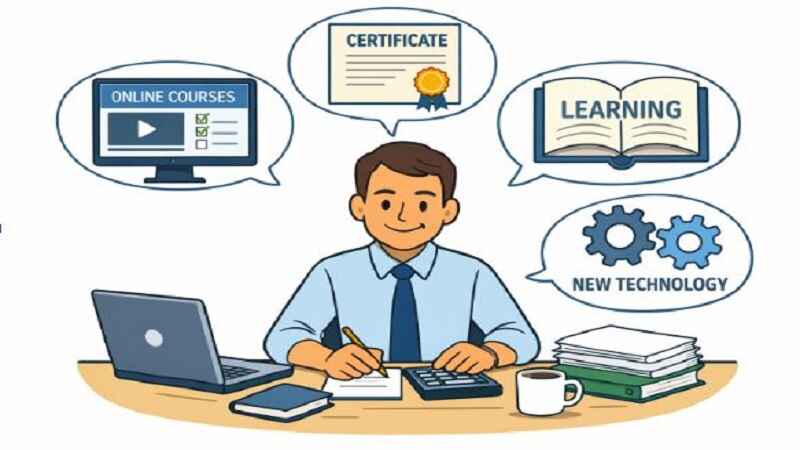
The Importance of Lifelong Learning in Accounting
The accounting profession is constantly evolving, shaped by frequent changes to tax codes, shifting industry standards, and rapid technological progress. Accountants must commit to lifelong learning to maintain expertise and credibility in this competitive landscape. Educational resources such as https://www.copas.org/online-cpe-courses-for-accountants/ are vital for professionals looking to efficiently access updated knowledge and new skill sets as the industry transforms.
Today’s accountants are tasked with more than merely balancing sheets; they need to stay up to date on regulatory changes and best practices that affect areas such as business valuations and financial reporting. The advent of technology, particularly automation and artificial intelligence, requires ongoing upskilling for professionals seeking to remain relevant. The Illinois CPA Society reports that the average lifespan of a professional skill has drastically decreased to 6 years, a stark contrast to earlier eras when skills could remain applicable for decades. This underscores the vital importance of continuous learning, which not only contributes to technical expertise but also equips accountants to navigate regulatory and market volatility with greater assurance.
Benefits of Continuing Education
Ongoing education provides accountants with both short-term and long-term advantages across their professional journeys:
- Regulatory Compliance: By staying up to date on tax laws and financial reporting standards, accountants reduce compliance risks and better serve their organizations and clients.
- Enhanced Skill Set: Learning about new technologies, data analytics methods, and accounting frameworks improves both the quality and efficiency of work.
- Career Advancement: Obtaining specialized certifications and new credentials increases eligibility for promotions and new career opportunities.
Moreover, continuous learning helps accountants adapt to emerging roles. As the profession shifts to include advisory and analytical responsibilities, the ability to proactively learn ensures a more agile and future-proof career path.
Flexible Learning Options
To meet the needs of busy professionals, the accounting education landscape has adapted by offering diverse and flexible learning formats. Online courses enable self-paced study, allowing education to be integrated with work and family commitments. Additionally, live and on-demand webinars provide timely insights into emerging topics, while in-person seminars and conferences afford hands-on experiences where professionals can engage with real-world scenarios and industry leaders. The availability of massive open online courses (MOOCs), professional workshops, and company-sponsored training enhances accountants’ ability to tailor their educational paths and sustain a competitive advantage. Consequently, these innovations have redefined continuing education as a vital resource for growth, creativity, and innovation in the accounting sector, transforming it from a mere annual requirement into a dynamic opportunity for professional development.
Integrating AI into Accounting Practices
The emergence of artificial intelligence is transforming accounting roles by automating audit processes, enhancing fraud detection, and improving data analysis accuracy. Accountants skilled in AI will be better positioned to harness these advancements for enhanced service delivery. Organizations like Becker Professional Education are responding by offering AI certification programs, ensuring that professionals remain relevant as accounting evolves towards data-driven strategies. The Wall Street Journal notes that the adoption of AI in financial departments is quickening, and those who fail to adapt risk falling behin
Meeting Certification Requirements
Professional certifications, such as the Certified Public Accountant (CPA) designation, are cornerstones of the accounting industry. Maintaining these credentials requires regular continuing professional education (CPE) credits. Most states require CPAs to earn at least 40 CPE credits annually or 120 credits over a three-year period. These standards ensure that practicing accountants do not just meet legal and ethical requirements, but consistently update their competency in technical skills, legal frameworks, and best practices.
The continued pursuit of CPE credits also facilitates exposure to new regulatory changes, making compliance easier and reducing the risk of oversight that could harm clients or employers. This approach exemplifies a proactive attitude toward professional development and job security.
Enhancing Job Performance
Accountants who engage in ongoing education frequently outperform peers who do not. Learning opportunities, such as instruction in emerging software platforms or guidance on evolving analytical models, lead to more accurate, efficient, and innovative work. Continuous skill development strengthens core competencies and enables accountants to offer a broader range of services and solutions to clients or business partners.
Furthermore, modern accounting roles often require a deep understanding of cross-disciplinary technologies. Training sessions that teach data visualization, cybersecurity, and risk management principles give professionals an edge in delivering high-value advisory and consulting services.
Networking and Collaboration
Participating in continuing education programs creates valuable connections. Whether through discussion forums in online courses or networking events at live seminars, accountants can exchange strategies, share insights, and build mutually beneficial relationships with peers. These connections foster opportunities for collaboration, mentorship, and even partnership in future business ventures.
Networking within learning environments often sparks innovation, keeps professionals attuned to industry shifts, and can lead to referrals or collaborative consulting opportunities.
Conclusion
For accountants striving to remain competitive, continuous education is more than an annual checklist. It is a strategic investment in ongoing relevance, enhanced performance, and career longevity. By embracing flexible learning options, staying abreast of technological changes, and actively connecting with peers, accounting professionals can not only survive but thrive in a rapidly changing industry.