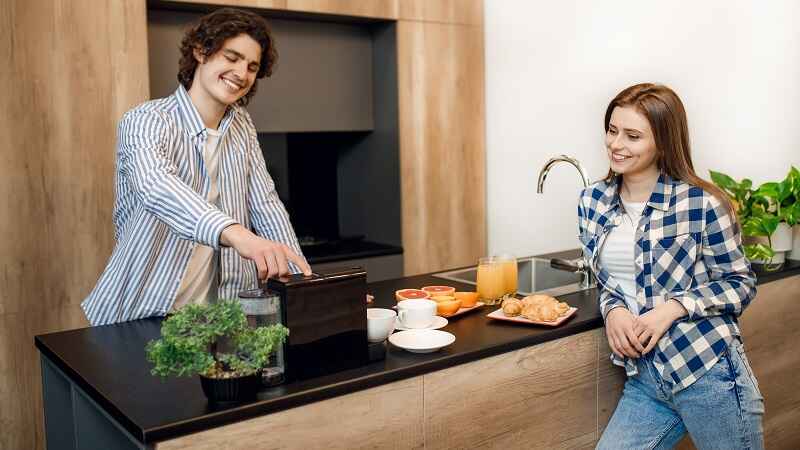
Most kitchen upgrades look good in a showroom, but real life happens at home. Coffee spills, bright morning light, messy cooking sessions, and the daily rhythm of opening drawers and wiping surfaces will quickly reveal whether your cabinets and countertops truly “fit” together, or whether they just matched in a sample rack. The goal is not perfection. It is harmony between function and style, so the space feels intentional and stays easy to live with over time, which is why many homeowners start their planning journey at northeast design build after browsing inspiration.
When these two elements are chosen as a pair instead of separate decisions, the entire kitchen tends to come together faster. You waste less money on rework, you avoid awkward color clashes, and you end up with a layout that feels calm instead of chaotic. The surprising part is that “working together” is not only about matching colors. It is about proportion, lighting, durability, and how the kitchen moves.
A lot of people assume a remodel is mainly about picking finishes, but the best results usually come from smartly sequencing the decisions and letting each choice support the next. If you want a good example of how a guided, step-based approach can reduce stress, you will see that mindset reflected in the way projects are described on http://kitchenmagic.com/, along with the emphasis on planning before installation.
The Secret Is Pairing, Not Picking
Cabinets and countertops are the visual “largest surfaces” in most kitchens, so they set the tone whether you intend them to or not. The cabinet finish dominates the vertical space, while the countertop anchors the room and takes the most daily abuse. If you choose one without thinking through the other, you can end up with a kitchen that technically looks fine, but feels a little off. Sometimes the undertones fight. Sometimes the sheen levels clash. Sometimes the countertop looks heavy and the cabinets feel flimsy, even if both were expensive.
Start With the Job Each Piece Needs to Do
Before you fall in love with any specific look, it helps to define what you need the kitchen to handle. A household that cooks every day needs different durability than a household that mostly reheats meals. A busy family might prioritize easy cleaning over delicate finishes. Someone who loves hosting may care more about seating flow and serving space than ultra-minimal design.
Cabinets carry the organizational burden, so think about drawers, pull-outs, pantry storage, and how easily you can access the things you use most. Countertops handle heat, moisture, sharp tools, and constant wiping. When you evaluate both through the lens of daily life, the best pairing often becomes obvious.
The Order That Keeps You Out of Trouble
Choosing cabinets and countertops in the right order prevents a lot of classic mistakes. This is where people can save money without sacrificing quality, because the most expensive errors often come from mismatched timing, not cheap materials. A countertop might be ordered too early, and then the cabinet plan shifts. Or cabinet colors are selected under store lighting, then the countertop sample looks completely different at home.
Cabinets First, Then Countertops, Then the “Finishing Touch Trio”
Cabinets usually come first because they shape the layout and define the strongest visual footprint. Once you know the cabinet door style, finish, and hardware direction, countertops become easier to narrow down. After that, you can choose the elements that tie everything together: backsplash, lighting, and hardware details. These finishing touches should support the cabinet and countertop pairing, not compete with it.
A simple way to think about it is that cabinets are the structure, countertops are the anchor, and the rest is styling. When you reverse that, you risk making styling decisions that force awkward structural compromises later.
Getting the Look Right in Real Light
A kitchen can look warm, cool, muted, or bright depending on your lighting, wall color, and even the direction your windows face. This matters because cabinets and countertops can share a “color family” and still clash due to undertones. White cabinets can lean creamy or crisp. Light countertops can lean gray, beige, or slightly pink. Wood tones can skew yellow, red, or neutral.
Undertones Matter More Than “Color”
If you want cabinets and countertops that genuinely work together, focus less on the basic color label and more on the undertone. That undertone is what your eye reads as harmony or conflict. When you bring samples home, check them in the morning, midday, and evening. Also check them with the lights on. A pairing that looks balanced in daylight can look strange under warm bulbs at night.
One simple habit helps here: place the cabinet sample vertically where it would be installed, and place the countertop sample horizontally where light hits it. Seeing them in the “real orientation” changes how your brain reads the combination.
Durability Without Losing Style
A beautiful kitchen that feels stressful to maintain is a quiet disappointment. The cabinets may show every fingerprint. The countertop may stain if you leave a spill too long. Even if it still looks nice, the daily effort adds up and makes the space feel less enjoyable.
Choose Materials That Match Your Habits
If you cook often, prioritize surfaces that tolerate heat, are easy to wipe down, and do not punish you for being human. If you have kids, consider how crayons, juice, sticky hands, and constant movement will impact your finishes. If you host, think about how people gather. Countertops become a social magnet, and cabinet storage needs to support serving, not slow it down.
It is also worth thinking about repairability. Some materials hide wear gracefully, while others show every scratch. Some cabinet finishes can be touched up, while others are harder to fix invisibly. There is no universal best, but there is always a best match for your household.
Proportion, Edges, and the “Feels Expensive” Factor
Sometimes a kitchen looks high-end even with simple materials, and other times it looks oddly mismatched despite premium choices. A big reason is proportion. Thick countertops can feel bold and modern, but they can also overpower delicate cabinet doors. Sleek countertops can feel elegant, but they can also make bulky cabinets look heavier.
Details That Quietly Make or Break the Pairing
Edge profiles and hardware style are small choices that have a big influence. A soft, rounded countertop edge often pairs well with traditional or transitional cabinet styles. A sharper, squared edge often pairs well with modern cabinet lines. Hardware finish also plays a role, because it visually sits between the cabinet and countertop. If your countertop has a strong movement or pattern, simpler hardware can calm the overall look. If your countertop is quiet, hardware can add interest.
This is one of the few moments where a short checklist helps, because it keeps you from focusing only on color:
- Compare sheen levels (matte vs glossy) so the surfaces do not “argue” under light.
- Check scale (busy countertop patterns often want quieter cabinet finishes).
- Match the vibe of edges and lines (soft with soft, crisp with crisp).
The Walkthrough Mindset That Prevents Regret
The final step is to imagine the space in motion. Open cabinet doors in your mind. Picture where you prep food and where you set groceries down. Think about how often you will clean, and what you are willing to maintain. A kitchen that works well is not just pretty. It is friendly to your daily routines.
Once you approach cabinets and countertops as a single system, you stop making isolated decisions and start building a cohesive plan. That is where the kitchen begins to feel like it was designed for you, not just decorated for a photo.