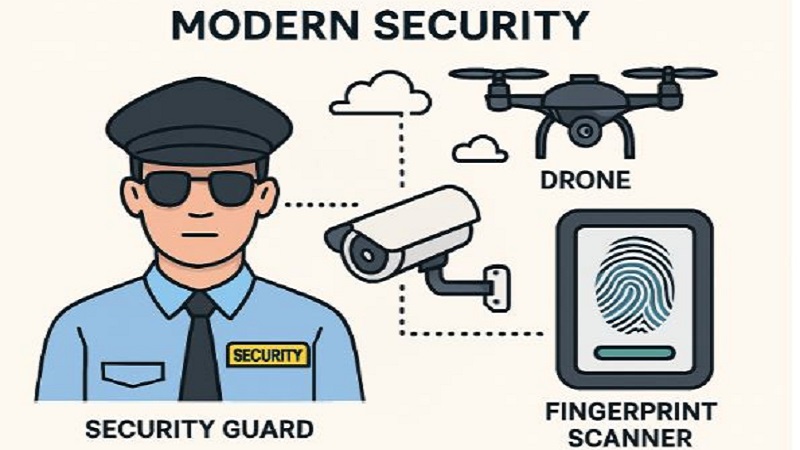
In today’s fast-paced world, private security services are undergoing rapid transformation, driven by cutting-edge technologies, increasing complexities, and emerging threats. As businesses and individuals seek reliable solutions, security firms are adopting innovative strategies to stay ahead. Companies like United States Protective Services are at the forefront, setting industry standards and adapting to the unique needs of their diverse client base. Advancements in artificial intelligence, the convergence of physical and digital vulnerabilities, and the demand for greater flexibility are shaping the future of security, presenting both opportunities and challenges. New tools, such as drones, biometrics, and remote monitoring, are redefining risk management and enhancing the overall effectiveness and efficiency of security operations. For business owners, property managers, and private individuals, staying informed about these shifts is crucial for making informed protection decisions. Clients are increasingly demanding tailored, proactive plans that provide comprehensive, scalable protection. As security risks become more sophisticated, integrated solutions that consider both technological and human factors are more essential than ever. The complexity of modern threats also necessitates enhanced personnel training, emphasizing anticipatory strategies, situational awareness, and multi-layered defense. Consequently, security solutions are now built around the philosophy of prevention rather than mere response.
AI and Predictive Analytics in Threat Detection
Artificial intelligence has propelled security technology into a new era. Modern surveillance systems leverage AI-powered video analytics to analyze live feeds and detect suspicious activity the moment it occurs—whether it’s unauthorized access, object removal, or unusual movement patterns. Predictive analytics takes this further, using evidence from previous incidents to identify high-risk trends and anticipate potential security breaches. Organizations can then reallocate resources proactively, enhancing both protection levels and operational efficiency. According to Forbes, the application of AI in security is dramatically increasing detection rates while reducing false alarms, making systems smarter and more reliable.
Cyber-Physical Security Integration
The boundaries between physical and digital security have all but disappeared. Modern access control systems, for example, are often interconnected with corporate IT networks, making them valuable targets for cyber attackers aiming to disrupt facilities or gain illicit entry. As a result, private security firms are combining traditional on-site defense with robust cybersecurity protocols. AI-driven monitoring platforms analyze both physical and digital channels, immediately flagging any suspicious activity across both spectrums. This holistic approach is especially critical as the Internet of Things (IoT) expands, blurring the lines between IT and physical assets.
Autonomous Drones and Robotics in Surveillance
Drones and robotic systems are revolutionizing large-scale and high-risk surveillance. Equipped with AI and an array of sensors, these autonomous devices can efficiently and safely patrol expansive or complex premises—from corporate campuses to critical infrastructure. Drones can deliver real-time high-resolution imagery or thermal data, drastically improving intrusion detection and emergency assessment. Meanwhile, ground-based robots excel at patrolling indoor spaces and reporting anomalies for human review. This technology not only extends the reach of security coverage but also minimizes human exposure to potentially dangerous environments.
Advanced Biometric Authentication Systems
Secure access management is evolving as biometric technology becomes increasingly widespread. Facial recognition, fingerprint readers, and iris scanners now complement or even replace PIN codes and security cards, providing unmatched user authentication accuracy. Advanced biometrics harnesses AI to ensure reliable identification, even when environmental conditions or partial data make it challenging. This makes unauthorized access much harder and enables organizations to enforce strict entry protocols where critical assets or information are involved.
The Rise of Remote Guarding
Remote guarding represents a paradigm shift for property protection, blending real-time CCTV streams, smart analytics, alert systems, and remote security officers into a single, responsive network. Security threats are first detected by AI-powered systems and reviewed by agents in off-site command centers, who can respond instantly—issuing warnings, activating alarms, or contacting local authorities as needed. This approach offers substantial cost savings over traditional on-site personnel and has proved especially effective for distributed or after-hours protection needs.
Emphasis on Customized Security Solutions
Highly tailored strategies are quickly replacing the “one-size-fits-all” mentality. Effective security plans begin with an in-depth risk assessment that considers location, layout, operating hours, industry, and potential vulnerabilities. From retail outlets to corporate offices and event venues, bespoke solutions offer greater adaptability to changing conditions, delivering actionable recommendations that fit each client’s precise requirements. Consultation services are in high demand as clients seek to maximize both security efficacy and cost efficiency.
Growth in Mobile Security Patrols
Mobile patrols have emerged as an essential choice for organizations managing large or multi-location facilities. These highly visible units can cover broader areas, adjusting routes and schedules to deter criminal activity and respond quickly to incidents. The combination of human judgment, local familiarity, and GPS-enabled technology ensures that security coverage remains both flexible and comprehensive. As risks change and new challenges arise, mobile patrols will continue to serve as a crucial supplement to fixed and remote strategies.
Proactive Crime Prevention and Threat Detection
Today’s clients expect more than just reactive guards; they require experts trained to identify risks early and take preventive action. Security personnel now undergo advanced situational awareness training and learn to use predictive analytics to identify suspicious behavior before it escalates into incidents. Whether securing warehouses, protecting industrial zones, or monitoring public spaces, proactive engagement is critical for reducing losses, protecting assets, and creating safer communities.
Conclusion
The landscape of private security is no longer defined by simple observation and reporting. As we have seen, the future of safety lies in the powerful integration between human expertise and autonomous technology. By integrating AI-driven analytics, biometric precision, and the agility of mobile and drone patrols, security firms are moving away from reactive measures toward a proactive prevention philosophy. Ultimately, achieving total security in a modern environment requires a holistic approach that bridges the gap between digital and physical defense. Whether through remote guarding or customized risk assessments, the goal remains the same: to create a resilient, scalable shield that adapts as quickly as the threats themselves. By embracing these innovative strategies, organizations and individuals can ensure a safer, more secure future in an increasingly complex world.