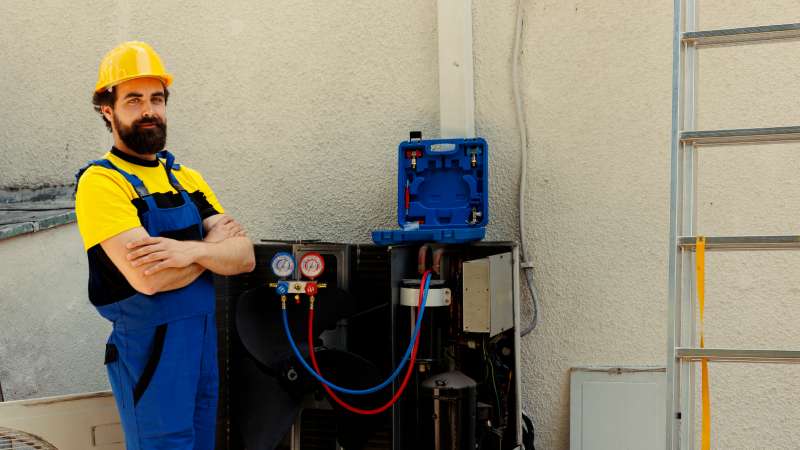
A light layer of frost on an outdoor heat pump can happen during cold weather, but heavy ice buildup is not normal. When the outdoor coil freezes solid, the system may struggle to pull heat from the outside air and move it indoors. Rooms can feel cooler, energy use may rise, and the unit may run longer than it should. An HVAC contractor matters because freezing can come from airflow trouble, low refrigerant, defrost failure, drainage issues, or outdoor debris. Finding the cause early helps protect comfort and keeps the heat pump from working under damaging strain.
Why Freezing Happens
- Checking the Defrost Cycle First
A heat pump has a defrost cycle that helps melt frost from the outdoor coil during heating operation. When this cycle works correctly, the system briefly shifts operation to clear ice before returning to normal heating. If the defrost control, sensor, reversing valve, relay, or related wiring is not working properly, frost can continue to build up until the coil is covered. An HVAC contractor can test whether the system enters defrost mode at the right time and remains in that mode long enough to clear the ice. This matters because homeowners may see the frozen outdoor unit and assume the weather alone caused it. While cold, damp air can create frost, a properly working heat pump should manage normal frost buildup. By checking the defrost system, the contractor can tell whether the unit needs adjustment, repair, cleaning, or a replacement part to restore steady heating.
- Inspecting Airflow Around the Outdoor Unit
Airflow is one of the main reasons a heat pump may freeze outside. The outdoor coil needs open space so air can move across it and enable heat transfer. Leaves, grass, mud, snow, branches, packed dirt, or items stored too close to the unit can block airflow and cause the coil temperature to drop too low. A service visit from Hot & Cold Equipment Services, Inc. can help identify whether ice is forming because the outdoor unit cannot breathe properly. The contractor may clear debris, inspect the coil surface, verify fan operation, and ensure the fan motor is moving air with sufficient force. If the fan is weak or not running, frost can grow quickly. Restoring airflow helps the unit absorb outdoor heat more effectively, reduces strain, and lowers the risk of repeated freezing in cold weather.
- Finding Refrigerant and Pressure Problems
Low refrigerant can also cause a heat pump to freeze because the system cannot transfer heat properly when the pressure levels are off. Refrigerant does not get “used up” during normal operation, so a low level may point to a leak that needs attention. An HVAC contractor can measure system pressures, check temperature readings, inspect refrigerant lines, and look for signs of leaks around coils, joints, or service valves. If refrigerant is added without finding the leak, the same freezing issue may return. Pressure problems can also stress the compressor, one of the most costly parts of the system. Careful testing helps determine whether low refrigerant, a restriction, a failing valve, or another system issue causes the freezing. Correcting the true cause helps the heat pump warm the home more reliably and prevents the outdoor coil from icing over again.
- Looking at Drainage and Installation Issues
A frozen heat pump can also be linked to drainage or placement problems. During defrost, melting frost must drain away from the outdoor unit. If water sits under or around the unit and refreezes, ice can grow from the bottom and block parts of the equipment. Poor elevation, uneven pads, clogged drainage paths, or repeated runoff from gutters can all contribute to freezing. An HVAC contractor can inspect how the unit sits, where water flows, and whether the area around it allows proper drainage. The contractor may also look at refrigerant line insulation, wiring condition, coil cleanliness, and whether the outdoor unit has enough clearance from walls, fences, or landscaping. These details affect how well the heat pump handles cold-weather operation. Fixing drainage and setup issues can help reduce ice buildup and protect the unit during repeated heating cycles.
- Preventing Bigger Heating Problems
Ignoring a frozen heat pump can lead to more than poor comfort. Heavy ice can restrict airflow, strain the fan, reduce heat transfer, and force the system to run longer. In some cases, homeowners switch to emergency heat frequently, which may increase energy costs if it is used for extended periods. An HVAC contractor helps by identifying the cause before freezing turns into repeated shutdowns or damaged parts. The inspection may reveal a simple airflow blockage, but it may also uncover a weak motor, a faulty sensor, a refrigerant leak, or a defrost control issue. Once the problem is corrected, the system can heat with less strain and more consistent performance. Regular service before and during colder months can also catch early warning signs, such as slow defrosting, unusual noises, weak airflow, or ice that returns soon after melting.
Keeping Heat Steady
An HVAC contractor matters when a heat pump freezes outside, because ice buildup can indicate problems that require careful testing. The cause may involve airflow, defrost controls, refrigerant pressure, drainage, fan operation, or outdoor placement. Guessing or simply melting the ice may not stop the issue from returning. A contractor can inspect the system, repair the faulty part, and help the heat pump work safely through colder weather. When freezing is handled early, the home can stay warmer, the system can run with less strain, and costly damage becomes easier to avoid.