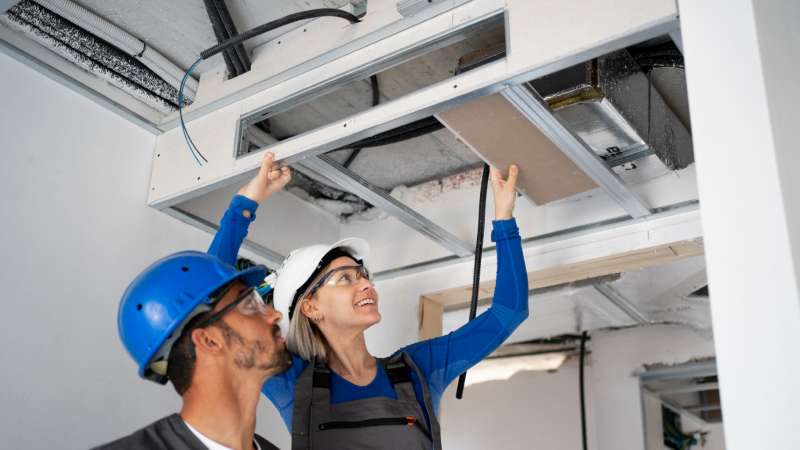
Urban buildings are increasingly shaped by dense populations, limited ventilation space, and rising concerns about indoor air conditions. As people spend more time inside offices, apartments, and commercial complexes, the quality of the air they breathe has become a major health and comfort factor. Poor airflow, accumulated pollutants, and moisture imbalance can contribute to discomfort and long-term respiratory issues. Addressing these challenges requires structured mechanical systems that manage air movement, filtration, and environmental balance.
HVAC contractors play a central role in designing, installing, and maintaining these systems so that indoor environments remain safe, stable, and breathable across different building types in urban settings.
Urban Air Quality Challenges
1.Airflow Design in Dense Structures
Urban buildings often face complex airflow limitations due to their height, layout, and surrounding structures that restrict natural ventilation. Proper HVAC system design helps regulate how fresh air enters and circulates within these environments. Contractors evaluate building size, occupancy patterns, and heat load distribution to determine the most effective air movement strategy. Without carefully planned airflow routes, contaminants tend to accumulate in enclosed spaces, reducing comfort and increasing health risks.
Mechanical ventilation systems are configured to ensure that air is continuously exchanged rather than recycled without control. This process supports balanced oxygen distribution and prevents stagnant pockets of air in crowded areas such as offices, hallways, and shared commercial spaces where airflow disruption is common.
2,Filtration and Contaminant Control
Air filtration is one of the most critical components in maintaining healthy indoor environments in cities where pollution levels are often elevated. Dust, vehicle emissions, industrial particles, and allergens can easily enter buildings through openings or ventilation systems. At this stage, an HVAC contractor evaluates filter types, system capacity, and maintenance schedules to ensure pollutants are effectively captured before circulating indoors. High-performance filtration units help trap microscopic particles that would otherwise affect respiratory health and overall comfort.
Over time, filters require regular monitoring and replacement to maintain effectiveness. This structured approach ensures that air passing through the system remains cleaner, reducing exposure to airborne irritants and improving overall indoor environmental quality in both residential and commercial urban spaces.
3.Humidity Regulation in Dense Buildings
Moisture levels inside urban buildings can fluctuate significantly due to weather changes, occupancy density, and limited ventilation pathways. Excess humidity often leads to discomfort, condensation, and conditions that support unwanted microbial growth. On the other hand, overly dry air can irritate the respiratory system and reduce comfort levels for occupants. HVAC systems are designed to maintain a balanced humidity range through controlled cooling, heating, and ventilation cycles. By adjusting airflow and temperature interaction, these systems help stabilize indoor moisture levels.
This balance is especially important in high-rise buildings where airflow inconsistencies are common. Proper humidity control not only enhances comfort but also protects building materials, furniture, and interior finishes from long-term moisture-related damage.
4.Ductwork Integrity and Cleaning
Duct systems function as the main pathways for air distribution across multiple rooms and floors within urban buildings. If ducts are poorly maintained, they can accumulate dust, debris, and other contaminants that circulate repeatedly through indoor environments. Regular inspection and cleaning ensure that airflow remains unobstructed and free from unwanted particles. Structural issues such as leaks or misaligned sections can also reduce system efficiency and introduce unfiltered air into occupied spaces. Maintaining duct integrity helps preserve consistent air pressure and balanced distribution throughout the building.
In densely populated environments, where HVAC systems operate continuously, clean ductwork plays a significant role in maintaining healthier indoor air and preventing the spread of airborne pollutants between different zones of the structure.
5.Energy Efficiency and Air Exchange Balance
Maintaining indoor air quality in urban buildings requires a careful balance between fresh air intake and energy consumption. Excessive ventilation can increase energy usage, while insufficient air exchange can lead to pollutant buildup. HVAC systems are designed to manage this balance by regulating airflow rates based on occupancy and environmental conditions. Energy recovery systems are often incorporated to reduce wasted heating or cooling energy during air exchange processes. This approach ensures that buildings remain comfortable without placing unnecessary strain on mechanical systems.
Efficient air management not only supports better air quality but also contributes to reduced operational costs over time. In busy urban settings, where buildings operate continuously, this balance becomes essential for sustainable indoor environmental control.
6.Monitoring Air Quality with Smart Controls
Modern HVAC systems in urban buildings increasingly rely on automated monitoring tools that track air quality indicators such as carbon dioxide levels, particulate concentration, and temperature variation. These systems adjust ventilation rates in real time to maintain stable indoor conditions. Sensors placed throughout different zones of a building provide continuous feedback that allows the system to respond quickly to changes in occupancy or environmental shifts. This dynamic control helps prevent the buildup of stale air while ensuring efficient energy use.
Building managers benefit from detailed data that helps identify patterns in air usage and system performance. As a result, indoor environments remain more consistent, reducing discomfort and improving overall air freshness for occupants in both residential and commercial spaces.
7.Preventing Mold and Biological Growth
Urban buildings with inconsistent ventilation and moisture control are more vulnerable to mold and biological growth. These conditions typically develop in areas where humidity remains high and airflow is limited, such as basements, storage rooms, and poorly ventilated corners. HVAC systems help reduce this risk by maintaining steady air circulation and controlling moisture levels. When air moves consistently through a space, it becomes more difficult for spores to settle and multiply. Temperature regulation also plays a role in discouraging biological growth by keeping conditions less favorable for development.
Routine system maintenance ensures that components remain clean and functional, reducing the likelihood of contamination. This protective function contributes significantly to healthier indoor environments, especially in densely populated urban structures.
Indoor air quality in urban buildings depends heavily on the performance and design of HVAC systems that regulate airflow, filtration, and environmental balance. These systems help reduce exposure to pollutants, stabilize humidity, and ensure consistent ventilation across complex building layouts. Through structured maintenance and monitoring, indoor environments remain more comfortable and safer for occupants in residential, commercial, and mixed-use spaces.
As cities continue to grow and buildings become more densely occupied, the importance of controlled air management increases further. Effective system operation supports healthier living conditions while maintaining efficiency and sustainability in modern urban infrastructure More Read ustudiobytes