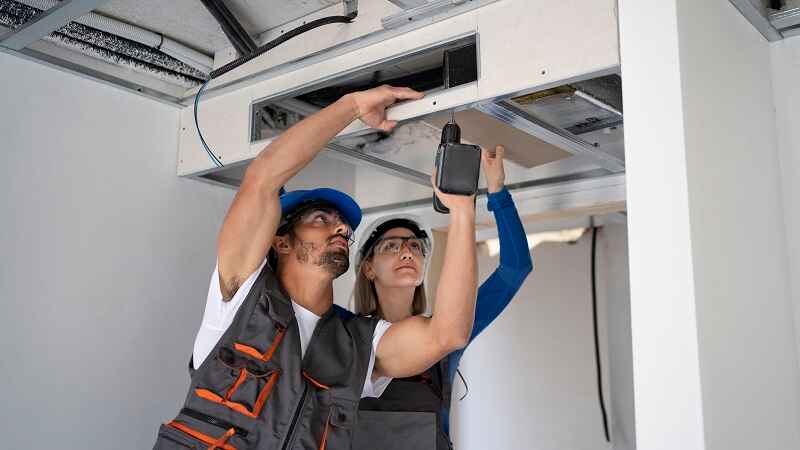
Residential air conditioning units cool homes by extracting indoor heat and releasing it outdoors. To maintain required temperatures, these systems use components like thermostats, refrigerant lines, air handlers, and compressors. HVAC professionals assess the building structure and the total number of conditioned rooms before selecting the type of system. Here are several different types of air conditioning installation options for your home:
Central Air Conditioning System Installation
Central air conditioning combines mechanical and airflow components, and it allows a single system to cool your home. Technicians may start by evaluating the structure’s layout to determine the appropriate capacity of the equipment and the most efficient duct configuration. Installers mount the outdoor condenser on a stable surface that allows adequate airflow for proper heat dissipation.
Inside the house, the indoor air handler or furnace connects to supply and return ducts that circulate conditioned air throughout the rooms. It also uses refrigerant lines to link the indoor evaporator coil to the outdoor compressor, allowing heat absorbed from interior air to transfer outside. This closed-loop refrigeration process lets the system continuously remove heat and humidity inside.
During air conditioning installation, the technicians calibrate airflow pathways and control systems that regulate cooling performance. They inspect the existing ductwork for issues, or they can install new ducts to create balanced air distribution between rooms. In this system, electrical wiring connects the compressor, blower motor, safety switches, and thermostat to create a coordinated control network.
Heat Pump System Installation
Heat pumps work through a mechanical system that can regulate indoor temperatures in both warm and cool seasons. Installation includes an outdoor heat pump unit paired with an indoor air handler that circulates conditioned air through supply ducts and return vents. The air handler connects to the evaporator coil and blower components, and this helps move air across the refrigeration system installed inside your home.
The reversing valve is a major component in this type of system; it can change the direction of refrigerant flow. In cooling mode, a heat pump removes heat from indoor air and releases it outside through the condenser coil. When heating, the system carries heat from outside, transferring it inside through the evaporator coil. Technicians can assess your property to determine equipment capacity, airflow requirements, and compatible duct connections to confirm system suitability.
Ductless Mini-Split System Installation
A ductless mini-split system provides air conditioning in homes where traditional duct systems are limited or absent. It works through electrical communication cables and an outdoor condenser that connects to indoor air-handling units through insulated refrigerant lines. These lines pass through small wall openings that link interior and outside components without requiring large duct pathways.
The indoor units encompass a fan and evaporator coil that circulate conditioned air directly into the room. This system improves air flow by recirculating indoor air through the unit and conditioning it directly in the living space, rather than relying on ductwork. Your technician mounts indoor units on walls or ceilings, from where the airflow distributes evenly across the room. They connect each interior unit to the outdoor condenser through dedicated refrigerant lines, and this allows the system to manage multiple rooms simultaneously.
High-Efficiency Air Conditioning Installation
High-efficiency cooling systems are designed to operate with improved energy performance. This equipment may come with advanced compressor technology, updated thermostat controls, and variable-speed blower motors. Some modern systems regulate airflow through electronic monitoring, and they adjust cooling output based on indoor temperatures. HVAC contractors may evaluate the compatibility of the home’s duct system and electrical configuration before installing these types of units.
Hire an Air Conditioning Installation Company
Each HVAC installation method requires specialized equipment placement, airflow management, and electrical connections. When you plan to install or replace a system, review the available configurations with a qualified contractor; this helps determine how each option fits the layout of your property. Some contractors also review local climate conditions and seasonal temperature patterns, which can influence final decisions. Schedule a consultation for professional air conditioning installation to determine the most appropriate setup for your home.